





Ever wake up in the morning with a stiff neck? Feel that ache that seems to last for two or three days? Don’t know if it’s because you’ve slept wrong or if your pillow is rubbish?
“The Levator Scapulae muscle is one of the biggest causes of morning neck pain”
Morning neck pain is a recurrent problem for many people. For some it destroys days after days as they struggle to focus and maintain concentration from the neck which is stiff and achy. For others it stops them from driving, riding their bike or going for a run.
But do we really need to keep suffering like this…? Is there not a simple solution…?

One of the most common causes of morning stiff neck is a lack of support from your pillow overnight. When we lack support from our pillow, we often overcome this by shrugging the shoulder all night long.
One of the key muscles that’s involved in elevating the shoulder and providing this action is a muscle known as the Levator Scapulae. It’s a key muscle used in lifting our shoulder, stabilising our shoulder blade and supporting the neck.
When we spend 8 hours overnight without adequate support, this muscle contracts all night long and in the morning we wake up feeling like we’ve done an 8 hour gym session.
You might feel a constant burn in that area whilst others may feel more like they’ve done a big fitness session, similar to what you experience with delayed onset muscle soreness. Either way the key to overcoming this problem is ensuring you have correct support overnight.
The most obvious solution to fixing this problem is to ensure you have a good quality pillow that supports you correctly, but in reality, it’s not just your pillow that needs to support you but also the mattress you’re sleeping on as well.

You see if the pillow is not supporting your neck very well, we end up with a space under our neck and this is what our shoulder tries to fill. However, if your mattress is getting soft, you’ll begin to sink into it and no longer have a horizontal surface which changes the angle of which your neck and head meets your pillow. The result in both circumstances is inadequate support.
So, what should you be looking for in a good quality pillow…?
OK, here are my top three things to look for in a good quality pillow:

- A contoured shape – I know many people have been frustrated by contoured pillows over the years and you may be just the same, but a contoured pillow is required to provide enough shape to fill the void that’s housed around your neck. When we use traditional pillows that sloped down on the ends rather than up it becomes very hard for the pillow to fill and support that space
- The right height – Yeah sounds simple doesn’t it? But in reality, when was the last time someone actually checked you out to see what height of pillow you need, in fact has anyone ever? You see everyone has a different shape of neck different widths of shoulders and different levels of body weight and as such just like shoes most people need different sizes and shapes of pillows.
- The right density – You’re probably totally confused by what I mean by density. Well density is how firm the pillow is. Density is actually a very critical and important aspect of choosing a pillow. People that tend to have higher levels of sensitivity especially around their face, such as migraine or TMD sufferers, generally require a soft pillow to be comfortable. A softer pillow though means they sink further into it which may mean they require a higher pillow to overcome that.
Getting the right level of support for the night is a lot more difficult than just jumping down to your local store and picking up a new pillow. In fact the new pillow you pick up may actually be less supportive than the one that you’ve owned for 10 years.
When choosing a pillow we need to ensure that all three of these areas a properly addressed in addition to the density of your mattress that you sleep on. But finding the right level of support may potentially stop those sleepless nights and those aching days and mornings.
If you’re stuck, unsure what pillow suits you, just reach out, send me a message. Slide me a DM or click the chat button and we’ll arrange for one of our expert chiropractors to thoroughly assess you and workout which pillow is right for you.

The neck you wake up with is the product of everything that happened to it during the night. That's eight hours of sustained loading, neuromuscular regulation, and recovery — or the failure of it. Understanding what's actually happening during those hours changes how you think about this problem entirely.
Ever wake up in the morning with a stiff neck? Feel that ache that seems to last for two or three days? Don't know if it's because you've slept wrong or if your pillow is rubbish? Morning neck pain is a recurrent problem for many people. For some it destroys days after days as they struggle to focus and maintain concentration from the neck which is stiff and achy. For others it stops them from driving, riding their bike or going for a run.
The Levator Scapulae muscle is one of the biggest causes of morning neck pain
The Levator Scapulae: The Muscle Most Responsible for That Morning Kink
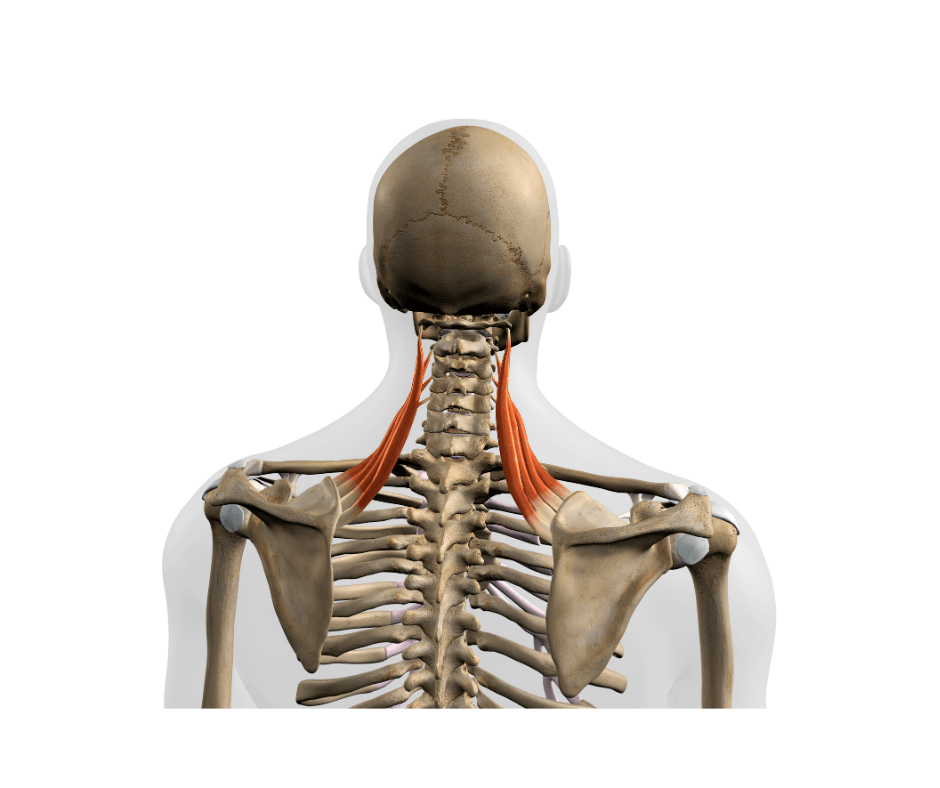
If you've ever woken with that sharp, one-sided ache that makes it painful to look over your shoulder or reverse the car, you've almost certainly experienced levator scapulae tension at its worst.
When the neck doesn't have adequate support during sleep, the shoulder compensates. Rather than the pillow filling the space under the neck and keeping the cervical spine in a neutral position, the shoulder shrugs subtly upward all night to provide the missing support. The levator scapulae is the primary muscle driving that shoulder elevation. Eight hours of sustained, low-level contraction in a single muscle, night after night, is a reliable recipe for chronic morning stiffness.
But here's what the pillow-focused narrative misses: the levator scapulae doesn't just respond to mechanical loading. It responds to neurological tone. A muscle that is neurologically facilitated — meaning the nervous system is keeping it in a state of heightened readiness — will be tight regardless of how good your pillow is. And the factors that drive neurological facilitation of this muscle are often entirely unrelated to sleep setup.
Why This Is a Neurological Problem, Not Just a Mechanical One
The cervical spine and the muscles that surround it are among the most neurologically rich structures in the body. The density of proprioceptors — sensory receptors that provide the brain with information about position, movement, and load — in the cervical joints is extraordinary. The brain relies heavily on cervical input to regulate posture, balance, and muscle tone throughout the body.
When the cervical joints aren't functioning correctly — when there is restricted movement, altered joint mechanics, or chronic compression — the quality of that proprioceptive input changes. The brain responds by altering its motor output. In practical terms, this often means increased neurological tone in the muscles surrounding the dysfunctional segments — a protective response that manifests as chronic tightness, restricted movement, and the inability to fully relax the neck during sleep.
This is why people can switch pillows repeatedly, sleep in different positions, and still wake up with the same stiff neck. The mechanical environment changes but the neurological pattern doesn't — because the underlying joint dysfunction driving the pattern hasn't been addressed.
The Role of Stress, Cortical Function, and Fatigue
One of the most consistent observations I make in clinic is that morning neck stiffness tracks closely with stress load and overall fatigue. Patients often report that their neck is fine for several days, then locks up badly after a particularly demanding week at work, a period of poor sleep, or a patch of elevated anxiety.
This pattern has a neurological explanation. Chronic stress maintains elevated cortisol and activates the sympathetic nervous system — a state that is incompatible with the muscular downregulation needed for restful, restorative sleep. Research published in Scientific Reports confirmed a direct relationship between chronic psychological stress and cervical muscle tension, describing a cycle in which mental pressure manifests as sustained physical stiffness in the cervical region.
The brain's capacity to regulate muscle tone overnight depends on how well it can shift into a parasympathetic, recovery-oriented state during sleep. When that transition is impaired — by stress, by poor sleep architecture, or by the neurological noise generated by cervical joint dysfunction — the muscles never fully release. You wake up with the accumulated tension of a night that felt like sleep but didn't deliver genuine neurological recovery.
Nutritional status compounds this. The cervical muscles require adequate magnesium for effective relaxation — magnesium is the physiological antagonist to calcium-driven muscle contraction. Deficiency, which is common in people under chronic stress (stress depletes magnesium rapidly), means the muscles are biochemically unable to fully relax overnight. This is one of the most underappreciated contributors to morning neck stiffness that I see in practice.
Pillow Support: Important, But Not the Whole Picture
I don't want to dismiss pillow support — it is genuinely relevant, and getting it wrong makes everything worse. But I want to be honest about its limits as a standalone solution.
The purpose of a pillow is to maintain the cervical spine in a neutral position throughout the night — close to the alignment maintained while standing with good posture. When it fails to do that, the muscles must compensate, and the levator scapulae pays the price.

You see if the pillow is not supporting your neck very well, we end up with a space under our neck and this is what our shoulder tries to fill. However, if your mattress is getting soft, you'll begin to sink into it and no longer have a horizontal surface which changes the angle of which your neck and head meets your pillow. The result in both circumstances is inadequate support.
Three Factors That Determine if Your Pillow Is Doing Its Job
A contoured shape that fills the space under the neck, rather than a flat pillow that leaves a gap, is essential for most people. When we use traditional pillows that sloped down on the ends rather than up it becomes very hard for the pillow to fill and support that space.
This is highly individual and depends on shoulder width, neck length, and sleep position. Side sleepers need significantly more height than back sleepers. Getting this wrong is one of the most common errors I see. Everyone has a different shape of neck, different widths of shoulders and different levels of body weight and as such just like shoes most people need different sizes and shapes of pillows.
How firm the pillow is determines how much the head sinks into it. A pillow that is too soft allows the head to drop, negating the contour. Too firm and it pushes the head into flexion. People that tend to have higher levels of sensitivity especially around their face, such as migraine or TMD sufferers, generally require a soft pillow to be comfortable.
The pillow that works for your partner may be completely wrong for you. Shoulder width, neck shape, body weight, and sleep position all affect what height and density you need. If you're unsure, a proper pillow assessment is worth doing — it's one of the many things we assess at Spinewise.
Mattress firmness is equally relevant. As a mattress softens over time, the surface becomes uneven and the horizontal plane your body needs for neutral spinal alignment is lost. A pillow that was appropriate on a firm mattress may be entirely wrong on a mattress that has softened significantly.
Your sleep position matters too — and not just for the neck. Late-night screen use in bed is one of the habits I see most consistently correlated with morning neck problems. Lying propped up scrolling a phone or tablet holds the cervical spine in sustained flexion for extended periods — right before the hours when the muscles are supposed to be recovering. The nervous system goes into sleep still holding tension patterns from the previous hour.
When Morning Stiffness Becomes a Pattern Worth Addressing
An occasional stiff neck is a normal human experience. A stiff neck that wakes you several mornings a week, that takes an hour or more to ease, that affects your ability to drive, concentrate, or function — that is a pattern worth taking seriously.
The cumulative effect of chronically disrupted cervical mechanics and impaired overnight recovery extends beyond neck pain. The cervical spine's role in regulating neurological tone throughout the body means that persistent dysfunction here has downstream effects on headaches, shoulder function, arm symptoms, concentration, and energy levels. In my clinical experience, patients who address the underlying cervical dysfunction — rather than just managing the morning stiffness — report improvements across all of these areas.
If morning neck stiffness has become a regular feature of your life, the right approach is a proper assessment of the cervical mechanics, neurological tone, and contributing lifestyle factors — not simply a new pillow.
Book an assessment with Dr. Trevor Chetcuti at Spinewise →
Book Here →Watch: Understanding Neck Pain and How It Develops
References
- Sleep Foundation. Neck pain and sleep quality: approximately 70% of people with chronic neck pain experience poor quality sleep. Referenced from UpToDate clinical data. sleepfoundation.org, 2025.
- Scientific Reports (Nature). Chronic stress and muscle tension in the cervical region — direct relationship between psychological stress load and physical stiffness. Published via iamcure.com summary, 2026.