





Recovering from Concussion with Neurotracker
Concussions are among the most common injuries in sport, and while many people recover quickly, a growing body of evidence shows that even mild concussions can have lasting effects on brain health. For athletes and parents of young players, understanding the impact of concussion and how to support recovery is vital. Neurotracker, a scientifically validated visual-cognitive training system, is emerging as a valuable tool to help the brain recover from concussion and restore cognitive performance.
What is concussion?
A concussion is a mild traumatic brain injury (mTBI) caused by a blow to the head or body that transmits force to the brain. This impact disrupts normal neural function, often leading to symptoms such as headaches, dizziness, blurred vision, memory loss, fatigue, and difficulty concentrating. Although these symptoms often resolve within a few weeks, research shows that some individuals experience long-term effects including slowed reaction times, poor attention, and changes in visual processing.
Emerging research has revealed that concussions can result in structural and functional brain changes, particularly in regions responsible for executive function, attention, and spatial awareness. Repeated concussions or sub-concussive impacts can increase the risk of chronic traumatic encephalopathy (CTE), cognitive decline, and emotional dysregulation later in life.
Athletes in many different contact sports such as football, soccer, basketball and even hockey can be particularly vulnerable due to repetitive head impacts over time.
Following a concussion, many individuals experience visual-cognitive disturbances—difficulty tracking moving targets, processing multiple objects, or maintaining focus in busy environments. These symptoms are often linked to dysfunction in areas such as the parietal and frontal lobes, which coordinate visual attention and decision-making. Rehabilitation of these systems is crucial for returning to normal daily and sporting activities.
Neurotracker: A New Frontier in Brain Recovery
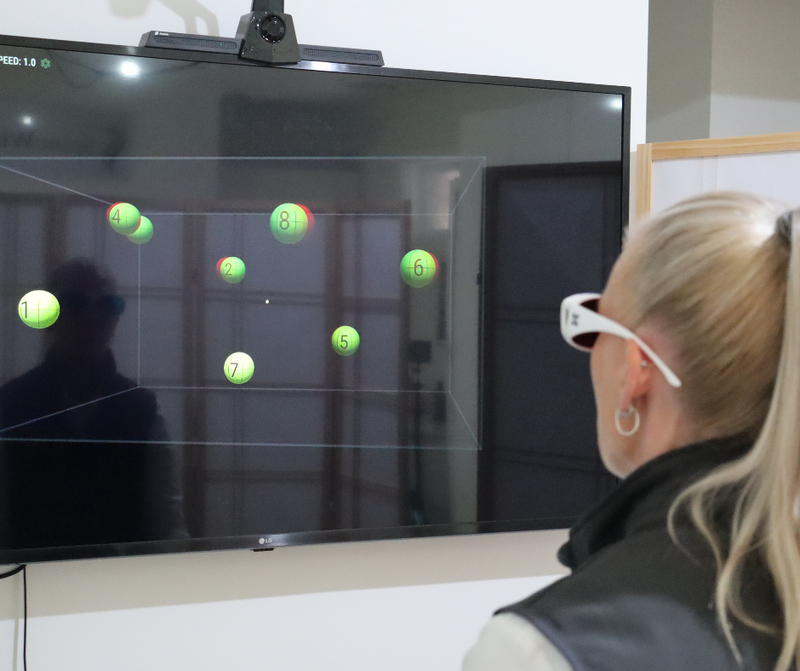
Developed by Professor Jocelyn Faubert, Neurotracker provides a scientifically validated method to enhance cognitive processing, attention, and visual tracking. The training involves following multiple moving targets on a screen in a 3D environment, challenging the brain’s ability to divide and sustain attention. This type of stimulation has been shown to activate key neural networks involved in attention, working memory, and executive function.
Recent studies have demonstrated that Neurotracker can accelerate recovery after concussion by improving attention, visual tracking, and processing speed. In one study, participants with mild traumatic brain injury who underwent Neurotracker training showed measurable improvements in cognitive performance and reduced post-concussion symptoms compared to control groups. The system’s adaptive difficulty ensures that each session is precisely calibrated to the individual’s cognitive capacity, making it safe and effective for gradual rehabilitation.
Beyond recovery, by training visual attention and cognitive control, Neurotracker may also play a preventative role in concussion. Enhanced attention and situational awareness can help athletes anticipate collisions and make quicker, safer decisions during play. These benefits extend beyond sport, improving concentration and cognitive endurance in school and work environments.
The Path Forward
Recovering from a concussion is about more than rest—it’s about retraining and restoring the brain. Neurotracker offers a structured, evidence-based approach to cognitive rehabilitation that helps restore performance and confidence. Whether for a young athlete returning to sport or an adult seeking to recover cognitive sharpness, Neurotracker provides a pathway toward improved brain health and resilience.
If you or your child are recovering from a concussion and want to explore how Neurotracker can help accelerate brain recovery, simply click here to contact us.
Need more information? Download our Guide to “Enhancing Neurocognition in Sport” – click here.
Dr. Trevor Chetcuti
BCSc, BAppSc(Clinical), DIBAK, CNET
PS. Want to learn more about how Neurotracker can enhance focus, attention, and cognitive performance? Just click here
References
1. Faubert, J., & Sidebottom, L. (2012). Perceptual-cognitive training of athletes. *Journal of Clinical Sport Psychology*, 6(1), 85–102.
2. Howell, D. R., et al. (2018). Visual and sensory integration deficits following concussion. *Clinical Journal of Sport Medicine*, 28(4), 349–355.
3. Guskiewicz, K. M., et al. (2005). Association between recurrent concussion and late-life cognitive impairment. *Neurosurgery*, 57(4), 719–726.
4. Parsons, B., et al. (2016). Enhancing cognitive function after brain injury: Evidence from Neurotracker training. *Frontiers in Human Neuroscience*, 10, 584.