





Enhancing Vision in Sport with Neurotracker
Vision is the most critical, yet often the most neglected, component of athletic performance. In ball sports, success depends heavily on an athlete’s ability to perceive and process complex visual information — to track multiple moving targets, read the play, and make rapid decisions. Despite its importance, visual-cognitive training is rarely emphasized in youth or junior sports development programs. Neurotracker is now changing that.
Why Vision Matters in Sport
In every game, athletes rely on visual input to guide movement, timing, and decision-making. Elite performers use not only central vision to track the ball but also peripheral vision to monitor teammates, opponents, and spatial positioning. These visual abilities underpin reaction time, coordination, and strategic awareness.

Research has shown that athletes with superior visual processing can anticipate plays faster and make more accurate decisions. A soccer player who can simultaneously track the ball, anticipate defenders, and locate teammates has a distinct advantage. Similarly, basketball players with advanced visual tracking demonstrate better assist-to-turnover ratios — a key indicator of efficiency and awareness.
Training Vision with Neurotracker Developed by Professor Jocelyn Faubert, Neurotracker is a scientifically validated training system that enhances an athlete’s ability to track multiple moving objects in 3D. The exercise may look simple — following spheres moving around a virtual space — but it targets complex neural networks responsible for attention, spatial awareness, and visual processing speed.
Studies have demonstrated that Neurotracker training improves athletes’ peripheral awareness, attention, and reaction time. In practical terms, this means a soccer player sees the whole field more effectively, a basketball player can anticipate passing lanes faster, and a cricketer can better judge ball trajectory under pressure.
Why It Matters for Junior Athletes
Despite its importance, vision training is rarely introduced during junior athlete development. This is quite disappointing considering middle childhood (8–12 years) are key developmental years for peripheral vision and multi-object tracking abilities. This makes it a critical period for introducing structured visual-cognitive training, such as Neurotracker, hand-eye coordination drills, and ball-sport reaction exercises.
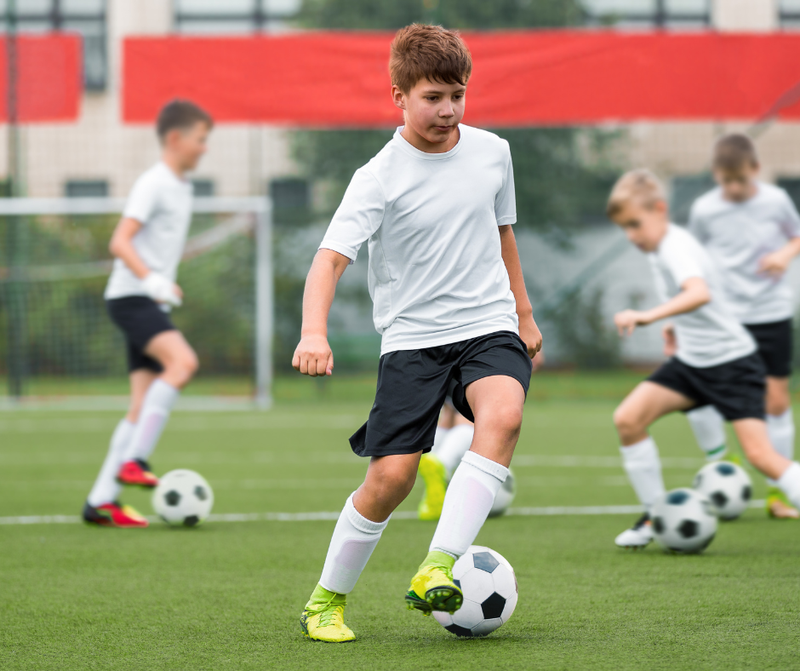
By integrating Neurotracker early, coaches can help young players develop superior visual awareness and decision-making — setting a foundation for elite performance later on. As motor skills and tactical understanding mature, strong visual processing ensures athletes are able to execute faster, make less errors and perform more accurately.
Where to start
Vision training is no longer just for professional athletes. Neurotracker provides a proven, accessible way to develop the visual-cognitive systems that drive performance in any sport.
If you’d love to start using the Neurotracker program to enhance your vision and on-field awareness, simply click here to contact us.
Need more information? Download our Guide to “Enhancing Neurocognition in Sport” – click here.
Dr. Trevor Chetcuti. BCSc, BAppSc(Clinical), DIBAK, CNET
### References
1. Faubert, J. (2013). Professional athletes have extraordinary skills for rapidly learning complex and neutral dynamic visual scenes. *Scientific Reports*, 3(1154).
2. Romeas, T., et al. (2016). Soccer athletes are superior to non-athletes at multiple-object tracking. *Frontiers in Psychology*, 7, 1720.