





Why Your Brain Treats Balance Like a Threat
Have you ever noticed that feeling off-balance — even briefly — can feel disproportionately unsettling, almost alarming? There’s a reason for that, and it goes some way to explaining why anxiety and balance issues so often show up together.
Balance Isn’t Just Physical — It’s Tied to Threat Detection
Your balance system isn’t just about staying upright. It’s deeply connected to the parts of your brain involved in detecting and responding to threats. From an evolutionary standpoint, losing your balance has always been physically dangerous — a fall could mean serious injury — so it makes sense that the brain treats disorientation as something worth reacting to strongly, not just a mechanical inconvenience.

Why Dizziness Can Feel So Distressing
This is part of why dizziness or unsteadiness can trigger a disproportionate emotional response. When your balance system sends signals that something isn’t right, it can activate the same general alarm systems the brain uses for other threats — a racing heart, a sense of unease, even panic.
It’s not “just in your head” in the dismissive sense; there’s a real physiological pathway connecting how your body senses balance and how your brain interprets safety.
The Anxiety-Balance Overlap: What Research Suggests
Researchers have explored the relationship between the vestibular (balance) system and anxiety for some time, and there’s growing interest in how closely the two can be intertwined. Some research points to a two-way relationship — balance dysfunction can contribute to anxiety-type symptoms, and anxiety itself may influence how the balance system responds. This remains an active area of research, and the relationship isn’t the same for everyone, but it offers a useful lens for understanding why the two so often appear together.
Why This Isn’t “All in Your Head”
If you’ve ever felt dismissed when describing dizziness alongside anxiety — as though it must be “just stress” — it’s worth knowing there’s a genuine physiological basis for the overlap. That doesn’t mean every case of anxiety has a balance-related cause, or that every balance issue causes anxiety. But for people who’ve experienced both without a clear explanation, understanding the connection can be validating in itself.
How This Shapes Our Approach at Spinewise
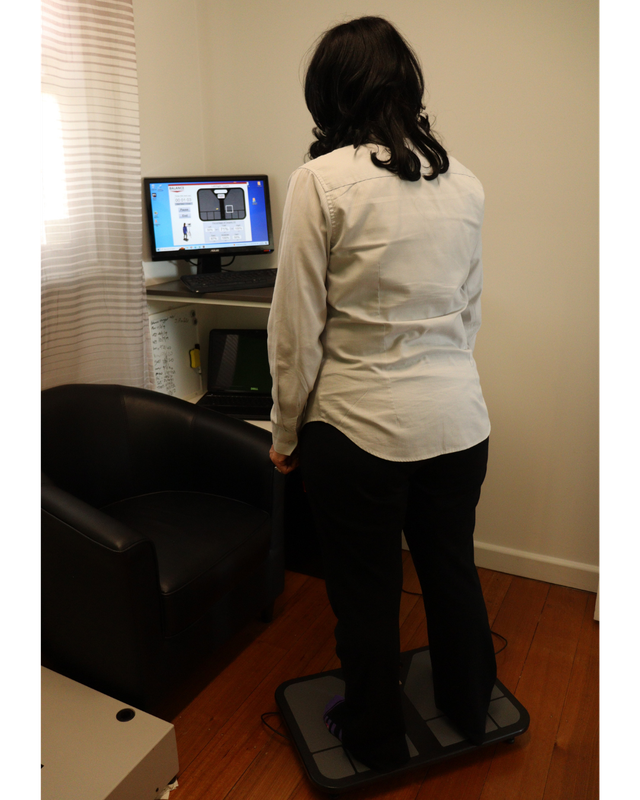
Because of this overlap, a thorough assessment for either dizziness or anxiety-related symptoms may include looking at balance function as part of the broader picture — not as a stand-alone explanation, but as one piece of a more complete assessment. This helps build a clearer understanding of what might be contributing to your symptoms, which then informs your care plan.
When to Get It Checked
If you experience both anxiety and balance-related symptoms and haven’t had a clear explanation for how they connect, it may be worth a thorough, functional assessment. Our Maidstone clinic can help build a clearer picture of what’s contributing to your symptoms. You can book an appointment or call us on (03) 9318 7758.
Frequently Asked Questions

Not necessarily. The relationship between balance and anxiety varies from person to person, and research in this area is ongoing. It’s one possible factor worth considering as part of a broader assessment, not a universal explanation.
The balance system is closely connected to the brain’s threat-detection pathways, so disorientation can activate a similar alarm response to other perceived threats — which is why it can feel disproportionately distressing.
No. This is complementary information, not a replacement for appropriate mental health care. If you’re managing anxiety, a mental health professional should remain part of your care team.
No referral is needed. You can book directly with our team, and we recommend bringing any relevant reports to your first visit.

About the Author
Dr Trevor Chetcuti, B.Chiro.Sc, B.App.Sc (Clin), DIBAK, CNET
Dr Trevor Chetcuti is Clinical Director at Spinewise in Maidstone, holding dual degrees in Chiropractic and Clinical Science from RMIT University and a Teaching Diplomate in Applied Kinesiology through the International College of Applied Kinesiology (ICAK). He is chairman of ICAK International’s Board of Research and Standards and has spent over 20 years helping patients work through complex health, neurological and pain-related concerns.