




Why "Feeling Fine" Isn't Enough to Clear a Concussion
If you’re a parent or coach trying to work out when a young athlete is ready to get back on the field after a concussion, “how do you feel?” is usually the first question asked — and often the only one. But symptoms alone can be an unreliable guide, and that’s where objective balance testing is starting to add real value.
How Concussion Clearance Is Often Decided
Return-to-play decisions are commonly guided by symptom checklists — headaches, dizziness, fogginess, sensitivity to light or noise. These checklists are a useful starting point, but they rely entirely on self-reporting. For young athletes especially, that’s a real limitation: kids and teens are often motivated to get back to their sport quickly, and may downplay or simply not notice subtler symptoms that are still present.

What Objective Balance Testing Adds
Balance and vestibular testing is emerging as one of the more sensitive tools for assessing concussion, used alongside standard symptom-based and medical assessment. Measuring balance function directly, rather than relying only on how someone says they feel, can pick up on things a symptom checklist might miss.
Why This Matters for Return-to-Play Decisions
The gap between “feeling okay” and being fully recovered is exactly where risk lives for young athletes. Returning to contact sport before the balance and vestibular system has genuinely settled can leave an athlete more vulnerable, even if they report feeling fine. Objective testing gives parents, coaches and practitioners another data point to weigh alongside symptoms and established return-to-play protocols, a useful addition to the picture.
What a Balance Assessment Involves
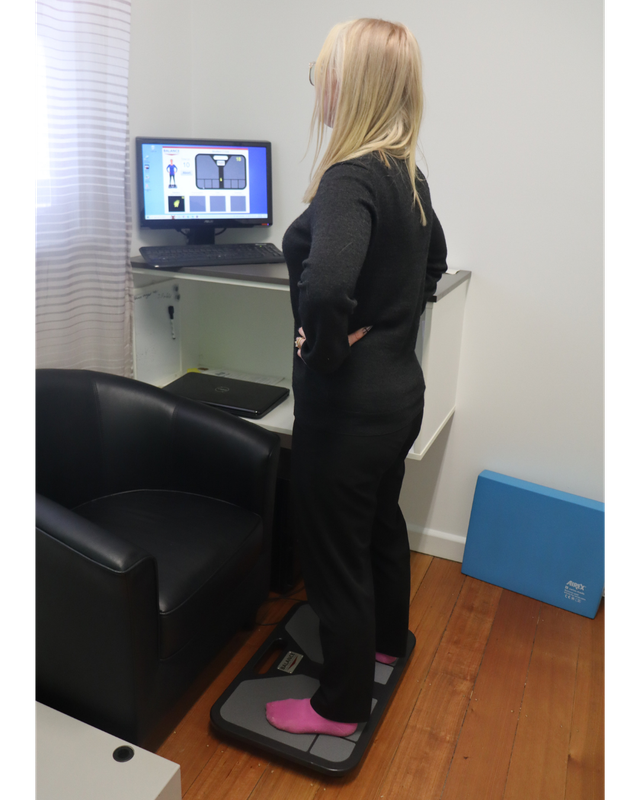
At Spinewise, a balance assessment includes a detailed history and digital balance platform testing to measure vestibular function objectively. This can be compared against results at later visits to track how things are progressing, giving a clearer picture than symptom reporting alone.
This kind of testing complements clinical assessment and any return-to-play protocol set by practitioner, sporting body or school. If a young athlete has had a suspected concussion, medical clearance should always be part of the process.
What Parents and Coaches Can Do
If a young athlete has had a head knock, it’s worth asking more than “how do you feel?” before clearing them to return. Encouraging a proper, layered assessment — clinical review plus, where appropriate, functional and balance testing — gives a more complete picture than symptoms alone, and can help avoid returning to sport too early.
When to Get It Checked
If a young athlete in your care has had a concussion, a thorough functional and balance assessment can add valuable information to the return-to-play decision, alongside medical clearance. Our Maidstone clinic offers digital balance testing as part of a broader assessment. You can book an appointment or call us on (03) 9318 7758.
Frequently Asked Questions

No. It’s a complementary tool used alongside medical assessment and established return-to-play protocols, not a substitute for them.
Symptom checklists rely on self-reporting, and young athletes in particular may underreport or not notice subtler ongoing effects, especially if they’re keen to get back to their sport.
It typically involves a detailed history and digital balance platform testing to objectively measure vestibular function, which can be compared against results at later visits.
No referral is needed. We recommend bringing any relevant medical reports or concussion assessment documentation to the first visit.

About the Author
Dr Trevor Chetcuti, B.Chiro.Sc, B.App.Sc (Clin), DIBAK, CNET
Dr Trevor Chetcuti is Clinical Director at Spinewise in Maidstone, holding dual degrees in Chiropractic and Clinical Science from RMIT University and a Teaching Diplomate in Applied Kinesiology through the International College of Applied Kinesiology (ICAK). He is chairman of ICAK International’s Board of Research and Standards and has spent over 20 years helping patients work through complex health, neurological and pain-related concerns.