





Why Focus Fails — And What You Can Actually Do About It
Let me ask you something.
Have you ever sat down to do something — read an email, follow a conversation, work through a task — and your brain just didn’t show up?

You’re not tired. You’re not stressed (well, maybe a little). You just can’t seem to lock in. Thoughts slip away before you can grab them. You re-read the same sentence three times. Someone’s talking to you and you catch maybe half of it.
That’s not laziness. That’s not a personality flaw. That’s a brain that’s running on cognitive overload and it happens to a lot of people.
Let me explain why focus fails, and introduce you to one of the most interesting tools we use in clinic to actually train it back: Neurotracker.
Your Brain Is a Filtering Machine
Here’s something most people don’t realise.
At any given moment, your brain is processing an enormous amount of information, sounds, light, movement, your own thoughts, conversations, physical sensations… It can’t consciously attend to all of it. So, it filters.
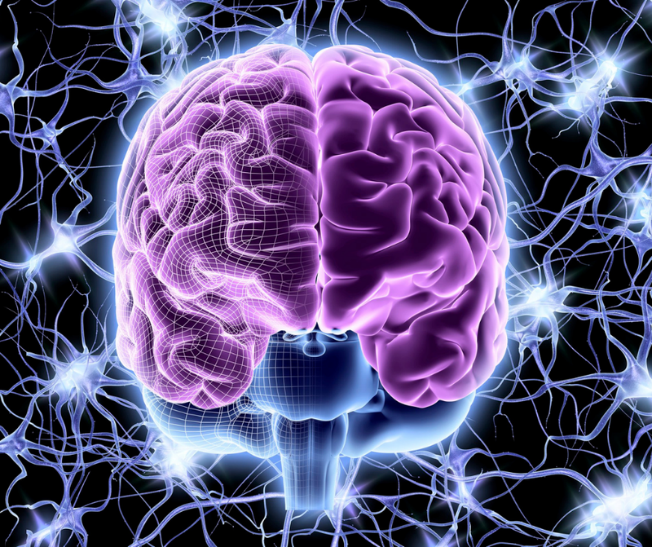
Your brain decides what’s important, suppresses the rest, and keeps you focused on what matters.
That filtering system is called your attentional network. And when it works well, you feel sharp. Things flow. You can hold a conversation, follow a task and still notice what’s going on around you.
But when it’s taxed, tired, or not working properly, everything starts to blur.
You get:
- Brain fog
- Difficulty concentrating
- Feeling mentally slow
- Easily distracted
- Overwhelmed by too much input
- Struggling to follow conversations or remember what you just heard
Sound familiar?
Why Does This Happen?
There are a lot of reasons an attentional system can start to underperform. Stress, poor sleep, a past head injury (even a mild one), chronic pain, long COVID, anxiety — they all tax the brain’s capacity to filter and focus.
Sometimes it’s cumulative.
If the brain hasn’t been challenged in the right ways for a while, just like a muscle that hasn’t been trained, it gets weaker at the thing it needs to do.
Here’s the good news: the brain can adapt and it can be retrained. That’s what neuroplasticity means in practice — the brain’s ability to change and improve with the right stimulus.
Which brings me to Neurotracker.
What Is Neurotracker?
Neurotracker is a 3D cognitive training system. It was developed out of over 20 years of neuroscience research and is one of the most scientifically studied tools of its kind in the world.
Here’s how it works.
You watch a 3D screen. Several balls appear — identical — and a few of them are highlighted. Those are your targets. Then they all start moving. Your job is to keep tracking your targets as everything moves around in 3D space.
That’s it. Simple concept. Brutally hard in practice.
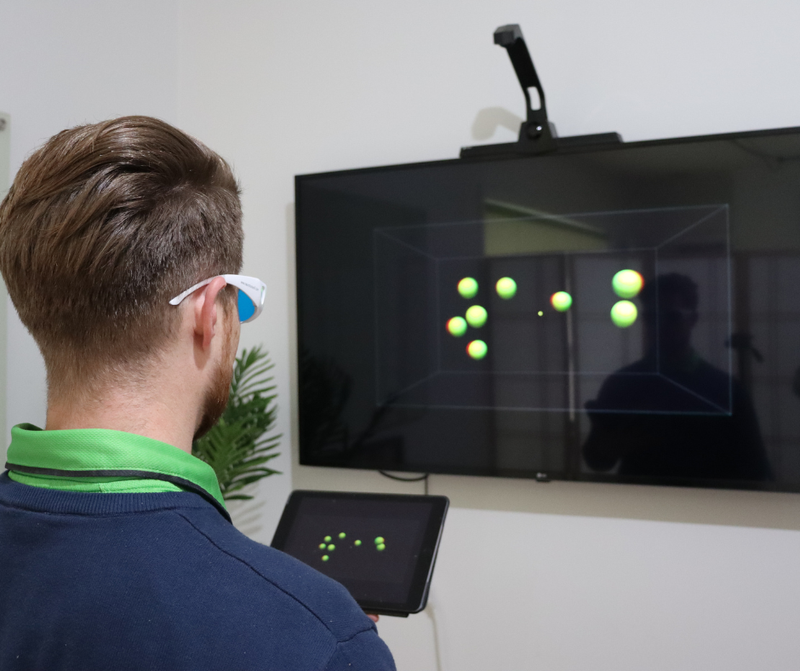
The system adapts in real time to keep you at the edge of your ability — not too easy, not impossible. Just hard enough that your brain has to really work.
Each session is only about six – eight minutes. But in those six minutes,
your brain is doing something very specific: it’s being forced to track multiple pieces of information simultaneously, filter out noise, maintain focus under pressure, and process movement in 3D space.
That’s an enormous cognitive workout and it directly trains the same attentional networks that tend to break down when you’re foggy, slow, or overwhelmed.
Who Uses It?
Originally, Neurotracker was developed for elite sport. NASA, Manchester United, the US Military — organisations that depend on people being able to think clearly under pressure. Athletes use it to sharpen decision-making speed and situational awareness on the field.
But the research has expanded well beyond sport. Neurotracker has been studied for:
- Concussion recovery and post-concussion syndrome
- Attention and focus
- Processing speed
- Working memory
- Elderly populations
- Neurodevelopmental conditions
- Injury Prevention
- Sports performance and more
One study even looked at brainwave activity before and after Neurotracker training, and found increases in the faster brainwave speeds associated with alertness and learning capacity.
Is This the Right Fit for You?
Neurotracker isn’t magic and it’s not for everyone. It’s a tool, and like any tool, it works best when it’s the right fit for the problem.
It pairs well with other approaches too: manual therapy for neck and vestibular issues that affect the brain, movement and exercise, Neurospecs stroboscopic glasses and targeted supplementation.
The Bottom Line
If your brain isn’t firing the way it used to, it’s worth taking seriously and not brushing off as “just stress” or “getting older.”
Your brain is trainable. The attentional system that drives focus, clarity, and mental speed can be challenged and improved with the right stimulus.
Neurotracker is one of the most researched ways we know of to do exactly that.
If you’re curious whether it might help what you’re dealing with, feel free to reach out. Tell me what you’re struggling with most — fog, concentration, slowness, overwhelm — and I can point you in the right direction.
Cheers,
Trev
Dr Trevor is a Chiropractor and Applied Kinesiologist with years of working with elite athletes and cognitive impaired people. Our Spinewise office is a multidisciplinary health clinic based in Melbourne. We work with patients experiencing neurological symptoms, post-concussion syndrome, chronic pain, athletes and complex health presentations. If you’d like to learn more about Neurotracker assessment and training, get in touch with our team by CLICKING HERE.