





How to Tell if Muscle Weakness Is Contributing to Your Knee Pain
Muscle weakness is one of the most commonly overlooked contributors to knee pain. While not every knee issue is caused by weakness, reduced muscle function can affect how forces are distributed through the knee joint and may influence movement quality during everyday activities.
At Spinewise, we often assess muscle function as part of a broader evaluation. Understanding whether a muscle is performing effectively can help determine whether strengthening exercises may be beneficial or whether other factors need to be addressed.

Why Muscle Strength Matters Around the Knee
The muscles surrounding the knee play an important role in supporting movement and stability.
One of the key muscle groups involved is the quadriceps, located at the front of the thigh. These muscles help straighten the knee, absorb forces during walking and running, and assist with activities such as climbing stairs, standing up from a chair, and squatting.
When the quadriceps are functioning well, they help distribute forces efficiently through the knee. However, if weakness develops, other tissues may be forced to compensate, potentially increasing stress on the joint.
This is why assessing muscle function can be an important part of understanding knee-related symptoms.
A Simple Way to Observe Quadriceps Function
One practical observation people can make at home is to compare the muscle contraction on each side.
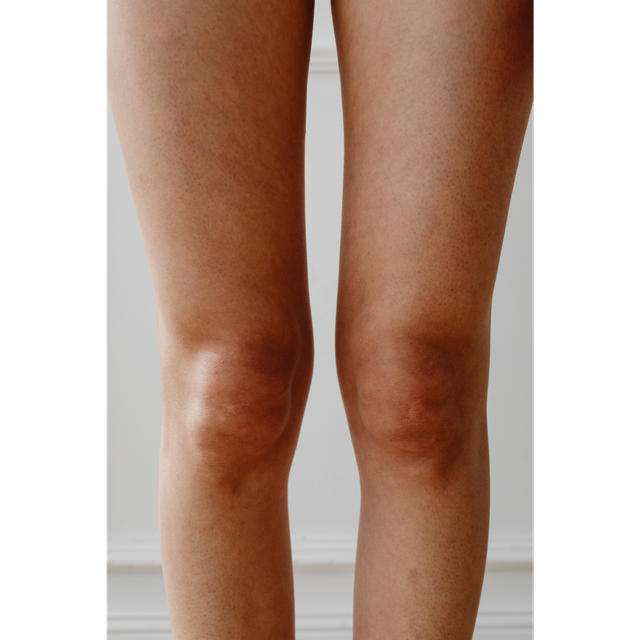
When you sit with your leg straight and tighten your thigh muscles as hard as possible, you may notice the muscles around the knee becoming more prominent. Comparing both legs can sometimes reveal differences in muscle size, activation, or control.
While this is not a substitute for a professional assessment, noticeable differences between sides may suggest that one leg is not activating as effectively as the other.
It is important to remember that muscle function is only one piece of the puzzle. Pain, injury history, movement patterns, joint function, and nervous system factors can also influence how a muscle performs.
Strengthening Exercises That May Help
If weakness is contributing to the problem, targeted strengthening exercises may be beneficial.
Exercises such as wall sits and step-ups are commonly used to improve quadriceps function because they challenge the muscles in ways that closely resemble everyday activities.
Step-ups, for example, mimic the movement pattern used when climbing stairs, while wall sits can help build endurance and control throughout the quadriceps.
The goal is not simply to make the muscle work harder. The goal is to improve the muscle’s ability to generate force, control movement, and support the knee during functional activities.
Progressive strengthening, when appropriate, can help improve confidence, stability, and movement efficiency over time, for some individuals.
Looking Beyond Strength Alone
Although weakness can contribute to knee problems, it is not always the primary cause.
Many people strengthen their muscles diligently yet continue to experience symptoms. In these situations, factors such as movement patterns, balance, joint mobility, coordination, recovery capacity, and nervous system regulation may also need to be considered.
The most effective approach is often identifying why the muscle became weak or inefficient in the first place rather than focusing solely on strengthening exercises.
At Spinewise, we assess strength alongside other factors that influence movement and performance. If you are experiencing knee pain, instability, or recurring discomfort during activity, book an appointment with the Spinewise team to help identify whether muscle weakness or other contributing factors may be affecting your recovery.
When to See a Professional
Home observations and simple exercises can be a useful starting point, but they are not a replacement for a professional assessment. It may be worth seeking guidance if your knee pain persists despite consistent exercise, if symptoms worsen with activity, if you notice swelling or instability, or if you are unsure whether an exercise is appropriate for your condition.
A thorough assessment can help clarify whether weakness, movement patterns, joint health, or other factors are the primary driver of your symptoms, and guide a plan that is appropriate for your individual situation.
Frequently Asked Questions

Weak quadriceps may contribute to knee pain in some cases, by reducing the muscles’ ability to support and control the knee joint during movement. However, the relationship between strength and pain is complex and a professional assessment can help identify what is contributing to your symptoms.
A simple comparison of muscle contraction during a strong knee extension may reveal noticeable differences between sides. However, a professional assessment provides a more accurate evaluation of strength and function.
Wall sits can be an effective exercise for improving quadriceps endurance and control when performed correctly and when appropriate for the individual’s condition.
Step-ups help strengthen the muscles that support the knee while also training functional movement patterns used during everyday activities such as climbing stairs.
This varies depending on the individual, the degree of weakness, consistency of training, and other health factors. With regular, appropriate exercise, some improvements in strength and function may be noticeable within a few weeks, though meaningful gains often develop over several months. A qualified practitioner can help set realistic expectations and guide a progressive programme.
At Spinewise, we assess muscle function, movement patterns, balance, coordination, joint mobility, and nervous system influences that may be contributing to knee pain. This helps guide a more individualised approach to recovery and performance.