
chiropractor near me

Serving Melbourne

for over 20 years

pain specialist melbourne

35 Churchill Ave , Maidstone

VIC 3012, Australia

icon-sticky

Serving Melbourne
for over 30 years

pain specialist melbourne

35 Churchill Ave , Maidstone, VIC 3012, Australia

Before Looking for a Complicated Answer, Check What Time You Go to Bed

There’s a lot that can genuinely contribute to fatigue, biochemistry, nervous system load, sleep quality, chronic stress. But it’s worth saying plainly, sometimes the explanation is refreshingly simple, and it’s amazing how often that turns out to be the case.

“I Can’t Figure This Out” — Until One Question Solves It

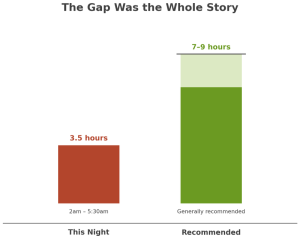
People often come in saying some version of, “I just can’t get up in the morning, I’m so tired, I can’t do this,” fully expecting something complicated is going on. Then comes one simple question: what time do you actually go to bed? “Oh, about two in the morning.” What time are you getting up? “About five thirty or six.” That’s not a mystery to solve, that’s three hours of sleep a night.

Three or Four Hours a Night Adds Up Fast

When the numbers are laid out like that, the fatigue isn’t surprising at all, it’s exactly what you’d expect. Nobody needs an unusual explanation for why someone running on three or four hours a night feels exhausted. Sometimes the arithmetic has already solved the problem before you go looking any further.

Why This Gets Missed

People don’t always connect their own bedtime to how they’re feeling, especially when late nights have become routine rather than the exception. It’s easy to focus on how tired you feel and skip past the very direct question of how much sleep you’re actually getting. This is a different issue to sleep quality, this is simply not spending enough time asleep in the first place.

Why It’s Worth Ruling Out the Simple Answer First

None of this means fatigue is always this straightforward, plenty of it isn’t. But it’s worth checking the basics before assuming something more complex is behind it. Adjusting something as direct as bedtime and seeing where things sit afterward is a sensible, low-effort first step before looking further.

Start With the Basics, Then Dig Deeper if Needed

If you’re dealing with ongoing fatigue, it’s worth being honest with yourself about what time you’re actually getting to bed before assuming there’s a more complicated explanation. If the basics check out and the fatigue is still there, that’s when it’s worth having a broader look. Our team at Spinewise in Maidstone offers thorough, functional assessments that consider sleep, nervous system and recovery factors together. Call us on (03) 9318 7758 or book online to talk it through.

Frequently Asked Questions

For some people, yes, it genuinely is that straightforward. It’s worth honestly checking your actual bedtime and wake time before assuming something more complicated is going on.

Most adults need somewhere in the range of seven to nine hours a night. Consistently getting substantially less than that is enough on its own to explain significant fatigue.

Late nights can become routine without feeling unusual, and it’s easy to focus on how tired you feel rather than doing the simple maths on your actual sleep window.

Start by being honest about your bedtime and wake time, and try adjusting it for a week or two. If the fatigue persists once you’re genuinely getting enough hours, that’s the point to look further.

Dr Trevor Chetcuti

About the Author
Dr Trevor Chetcuti, B.Chiro.Sc, B.App.Sc (Clin), DIBAK, CNET

Dr Trevor Chetcuti is Clinical Director at Spinewise in Maidstone, holding dual degrees in Chiropractic and Clinical Science from RMIT University and a Teaching Diplomate in Applied Kinesiology through the International College of Applied Kinesiology (ICAK). He is chairman of ICAK International’s Board of Research and Standards and has spent over 20 years helping patients work through complex health, neurological and pain-related concerns.