
Why You Can Sleep All Night and Still Wake Up Exhausted
Getting a full night in bed doesn’t automatically mean you’ll wake up feeling rested. If you’re waking up tired first thing in the morning despite what looks like a decent night’s sleep, there are several genuinely common explanations worth knowing about.
It’s Not Just About Hours in Bed
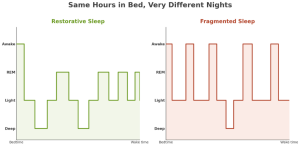
Sleep isn’t one uniform state, it moves through different stages across the night, and how much time you spend in each one matters as much as the total hours. Two people can both get eight hours in bed and wake up in completely different states, depending on how that time was actually spent.

Poor REM and Deep Sleep Are Common Culprits
Waking up tired is commonly associated with poor REM sleep, a lack of deep sleep, or simply not getting enough sleep altogether. If your sleep is fragmented, or you’re spending most of the night in lighter stages, you can rack up a full night by the clock without getting the restorative stages that actually leave you feeling recovered.

Sleep Apnea Is Worth Ruling Out
Waking up exhausted can also be a sign of sleep apnea, particularly if it’s paired with loud snoring, gasping or choking sounds during sleep, or a partner noticing pauses in your breathing. This is genuinely worth having properly assessed rather than guessed at, sleep apnea is diagnosed through a sleep study, and it’s worth raising with a healthcare professional if these signs sound familiar.
Thyroid Function Can Also Play a Role
Thyroid dysfunction can be a significant part of ongoing morning exhaustion too. It’s easily checked with a simple blood test, and it’s another reason a pattern of persistent, unexplained tiredness is worth having properly investigated rather than pushed through.
Getting a Clearer Picture of What’s Going On
If snoring, breathing pauses, or persistent unexplained fatigue are part of the picture, that’s worth raising with a healthcare professional, who can arrange a sleep study or thyroid testing if appropriate. Separately, our team at Spinewise in Maidstone offers thorough, functional assessments that look at broader lifestyle, nervous system and recovery factors that can affect sleep quality. Call us on (03) 9318 7758 or book online to talk it through.
Frequently Asked Questions
Total hours in bed doesn’t guarantee good sleep quality. Poor REM sleep, a lack of deep sleep, or fragmented sleep can all leave you feeling unrested despite clocking enough hours.
Loud snoring, gasping or choking during sleep, pauses in breathing noticed by a partner, and persistent daytime sleepiness are all worth raising with a healthcare professional for proper assessment.
Yes, thyroid dysfunction can be a significant contributor to ongoing fatigue, including waking up tired. It’s easily checked with a blood test through a healthcare professional.
Ruling out sleep apnea and thyroid dysfunction with a healthcare professional is a sensible first step. Beyond that, a broader look at lifestyle, stress and nervous system factors can help identify what else might be affecting sleep quality.
About the Author
Dr Trevor Chetcuti, B.Chiro.Sc, B.App.Sc (Clin), DIBAK, CNET
Dr Trevor Chetcuti is Clinical Director at Spinewise in Maidstone, holding dual degrees in Chiropractic and Clinical Science from RMIT University and a Teaching Diplomate in Applied Kinesiology through the International College of Applied Kinesiology (ICAK). He is chairman of ICAK International’s Board of Research and Standards and has spent over 20 years helping patients work through complex health, neurological and pain-related concerns.


