





Why We Test Your Balance With Your Eyes Closed
If you’ve had a balance assessment and been asked to stand still with your eyes closed, you might have wondered what that’s actually testing. It’s a simple test with a specific purpose — and it can reveal information that testing with your eyes open simply can’t.
What the Romberg Test Involves
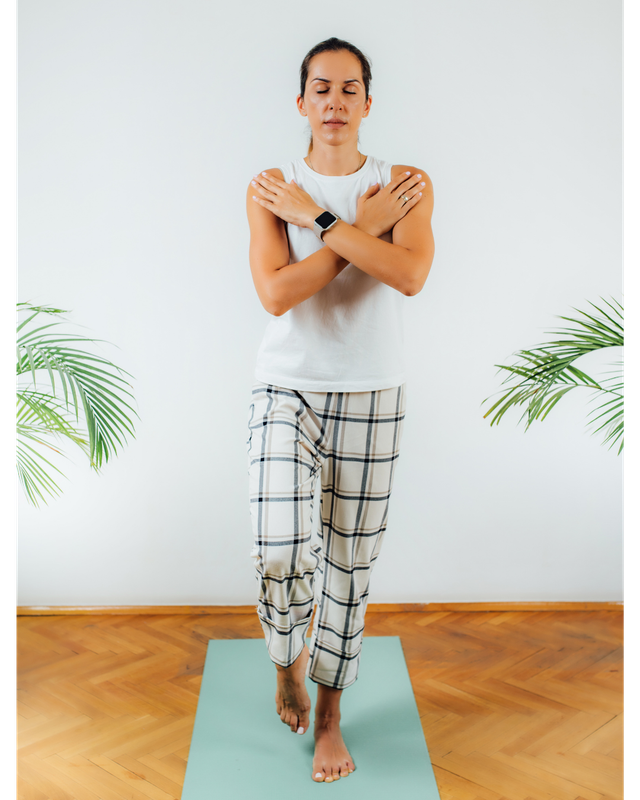
The Romberg test is a standard part of balance assessment. It typically involves standing still, feet together, first with your eyes open and then with your eyes closed, while a practitioner observes how well you maintain your balance in each position.
Why Closing Your Eyes Changes Everything
With your eyes open, your visual system is doing a lot of the work to help you stay balanced — it’s one of the three systems involved in balance, alongside the vestibular system and sensory input from your feet. When you close your eyes, that visual input is removed, which means your body has to rely more heavily on the other two systems. This can reveal whether your balance holds up without visual input, or whether it becomes noticeably harder to maintain.
What It Can Reveal About the Visual System
Some balance-related issues are described as vestibulo-ocular — meaning they involve the connection between the vestibular system and the visual system, rather than the vestibular system on its own. Testing with the eyes open and closed helps highlight whether visual input is playing a bigger role in someone’s balance than expected.
What It Can Reveal About Input From Your Feet
The other major factor revealed by eyes-closed testing is proprioceptive input from the feet — the sensory feedback your body relies on to know where it is in space when it can’t rely on vision. As Trevor explains: “When we start looking at people from the feet, we start seeing changes in specific forms of Romberg testing and things like this, where they struggle to maintain their balance with their eyes closed, even without any kind of external stimulus.”
Why This Matters — Balance Testing Beyond the Inner Ear
Balance is often thought of as mainly an inner ear (vestibular) issue, and that’s an important piece of the picture. But testing that only looks at vestibular function can miss contributions from the visual system or from the feet. Considering all three systems — including how someone performs with their eyes closed — helps build a more complete picture of what might be contributing to balance-related symptoms.
When to Get It Checked
If you’re dealing with balance-related symptoms, a thorough assessment that looks beyond the inner ear alone — including vision and input from your feet — can help identify what’s contributing. Our Maidstone clinic offers this kind of functional assessment. You can book online or call us on (03) 9318 7758.
Frequently Asked Questions

It suggests your visual system may be playing a significant role in helping you maintain balance, and that this contribution is worth exploring further as part of a broader assessment.
No, it’s typically one part of a broader functional assessment, alongside other testing and a detailed history.
Sensory feedback from your feet — proprioception — is one of the three systems involved in balance, alongside vision and the vestibular system. Issues here can contribute to balance-related symptoms even if your inner ear is functioning normally.
No referral is needed. You can book directly with our team, and we recommend bringing any relevant scans, test results or specialist reports to your first visit.

About the Author
Dr Trevor Chetcuti, B.Chiro.Sc, B.App.Sc (Clin), DIBAK, CNET
Dr Trevor Chetcuti is Clinical Director at Spinewise in Maidstone, holding dual degrees in Chiropractic and Clinical Science from RMIT University and a Teaching Diplomate in Applied Kinesiology through the International College of Applied Kinesiology (ICAK). He is chairman of ICAK International’s Board of Research and Standards and has spent over 20 years helping patients work through complex health, neurological and pain-related concerns.